
VSAT
Satellite Systems Technology
-
3 Days, Instructor Led
Training
Student Reviews
What is VSAT Satellite Technology?
VSAT stands for Very Small Aperture Terminal. It’s a two-way satellite communication system that uses small Earth stations to transmit and receive data via satellites. The “very small” in VSAT refers to the antenna size, which typically ranges from 75 cm to 3.8 meters in diameter—significantly smaller compared to traditional satellite dishes.
Here’s a breakdown of the critical components:
- Terminal: This is the user equipment installed at your location. It includes a dish antenna, transceiver unit, and modem for sending and receiving signals.
- Network Operations Center (NOC): This central hub manages the satellite network, ensuring smooth communication between terminals and satellites.
- Satellite: The satellite system relies on satellites in geosynchronous or geostationary orbit. These satellites appear stationary from the Earth’s perspective, enabling a constant connection.
How Does VSAT Work?
Understanding the communication flow is essential. Here’s a simplified explanation:
- Signal Amplification: The VSAT satellite receives the weak signal, amplifies it, and transmits it back to Earth.
- Data Reception: The designated VSAT satellite terminal or a central hub receives the amplified signal and decodes it for further processing.
- Data Transmission: Your VSAT satellite terminal transmits data (voice, internet, video) to the satellite. The antenna focuses the signal into a narrow beam and directs it towards the satellite.
Configurations:
- Star Network: This is the most common setup, where multiple VSAT satellite terminals connect to a central hub station through a single satellite. The hub acts as a central point for communication exchange.
- Mesh Network: In this setup, VSAT satellite terminals directly communicate with each other through satellites, eliminating the need for a central hub. This is useful for geographically dispersed locations.
- Point-to-Point Network: This dedicated connection links two specific VSAT satelitte terminals, ideal for private communication channels.
Applications:
- Remote Internet Access: Satellite provides reliable internet connectivity to individuals and businesses in geographically isolated locations, such as offshore rigs, rural villages, and mountains.
- Maritime and Aviation Communication: Ships and aeroplanes can leverage on this technology for critical communication services like voice calls, data transfer, and navigation updates.
- Disaster Relief: Satellite becomes a lifeline during natural disasters by enabling communication restoration in affected areas where traditional infrastructure might be damaged.
- SCADA Systems: Satelite is an integral aspect of Supervisory Control and Data Acquisition (SCADA) systems, and industries such as oil and gas and power transmission utilize it to remotely monitor and operate critical infrastructure.
- E-Learning: Educational institutions in remote areas can leverage satellite to deliver online learning programs and bridge the digital divide.
Benefits:
This technology offers several advantages over conventional communication methods:
- Comprehensive Coverage: It provides connectivity virtually anywhere on Earth, overcoming geographical limitations.
- Scalability: Users can increase or decrease the system’s capacity to meet evolving needs.
- Cost-Effective: While initial setup costs might be higher, satellite can be cost-effective in remote locations where terrestrial cables are expensive.
- Fast Installation: VSAT terminals are relatively simple to install and can be operational quickly.
- Reliable Communication: Offers a dependable and robust connection, especially in areas prone to weather disruptions that can affect terrestrial networks.
Limitations:
While this technology offers numerous advantages, it’s essential to consider some limitations:
- Bandwidth Costs: Satellite can be higher than terrestrial options, especially for high-bandwidth applications.
- Latency: Because satellite communication involves enormous distances, latency (signal delay) may be more significant for satellite VSAT than for fibre optic cables. This might be noticeable in applications requiring real-time data exchange, like video conferencing.
- Weather Dependence: Heavy rain, snow, or strong winds can temporarily disrupt satellite SAT signals, affecting communication quality.
- Equipment Costs: Setting up a satellite network requires an initial investment in antennas and transceivers.
Course Description
This training is the industry-leading course essential for everyone who works in the satellite communications industry. The course covers all aspects of satellite theory, RF & antennas, installation, fault finding, and everything you should know to be a successful VSAT technician.
The workshop will provide participants with in-depth understanding of VSAT systems and protocols, provide-a comprehensive introduction to VSAT concepts, satellite communications systems, technologies and protocols, and allow delegates to understand and assess VSAT systems for deployment into corporate wide area network solutions.
It will cover a wide range of issues relating to satellite communications, and regulatory issues, including the role of the regional and international satellite communications organizations.
Content Coverage
- Satellite Systems Design and Technology
- Earth Stations Technology
- Transmission and Network Planning
- Link Budget Analysis and Design
- VSAT Installation and Maintenance
- Earth Station and VSAT Registration – Best Practices
- WiMax and Other Terrestrial Interference Issues
- Frequency Registration & Intersystem Coordination
- Regulatory Factors, Licensing, Orbital Slot Registration and Ownership
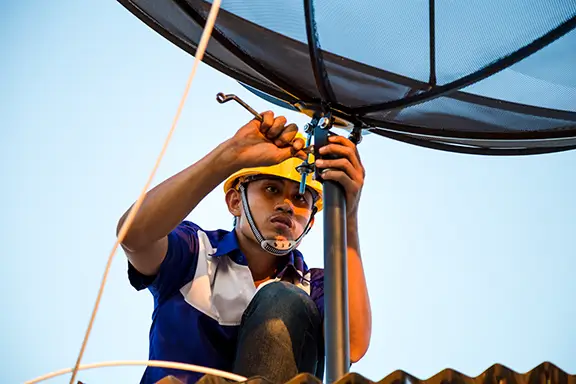
Join a Global Force of Qualified VSAT Satellite Systems Installation Technicians to Support the Development of VSAT Networks globally.
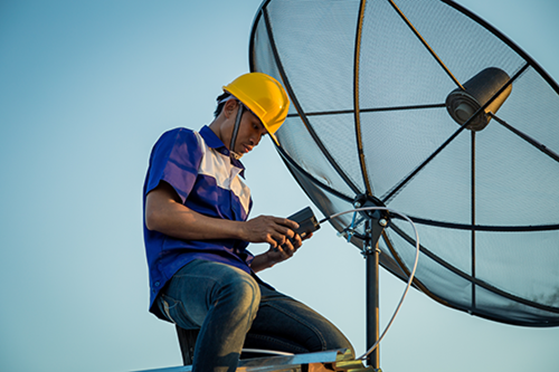
Who Needs to Attend
Engineers, information technologists, managers, and employees from regulators, government institutions, NGOs, and telecommunication companies, who are interested in acquiring a technical understanding of VSAT systems and detailed knowledge of current systems design.